

- Home
- Motor Magnets
Motor magnets for BLDC, servo and EV motors, made to your drawing.
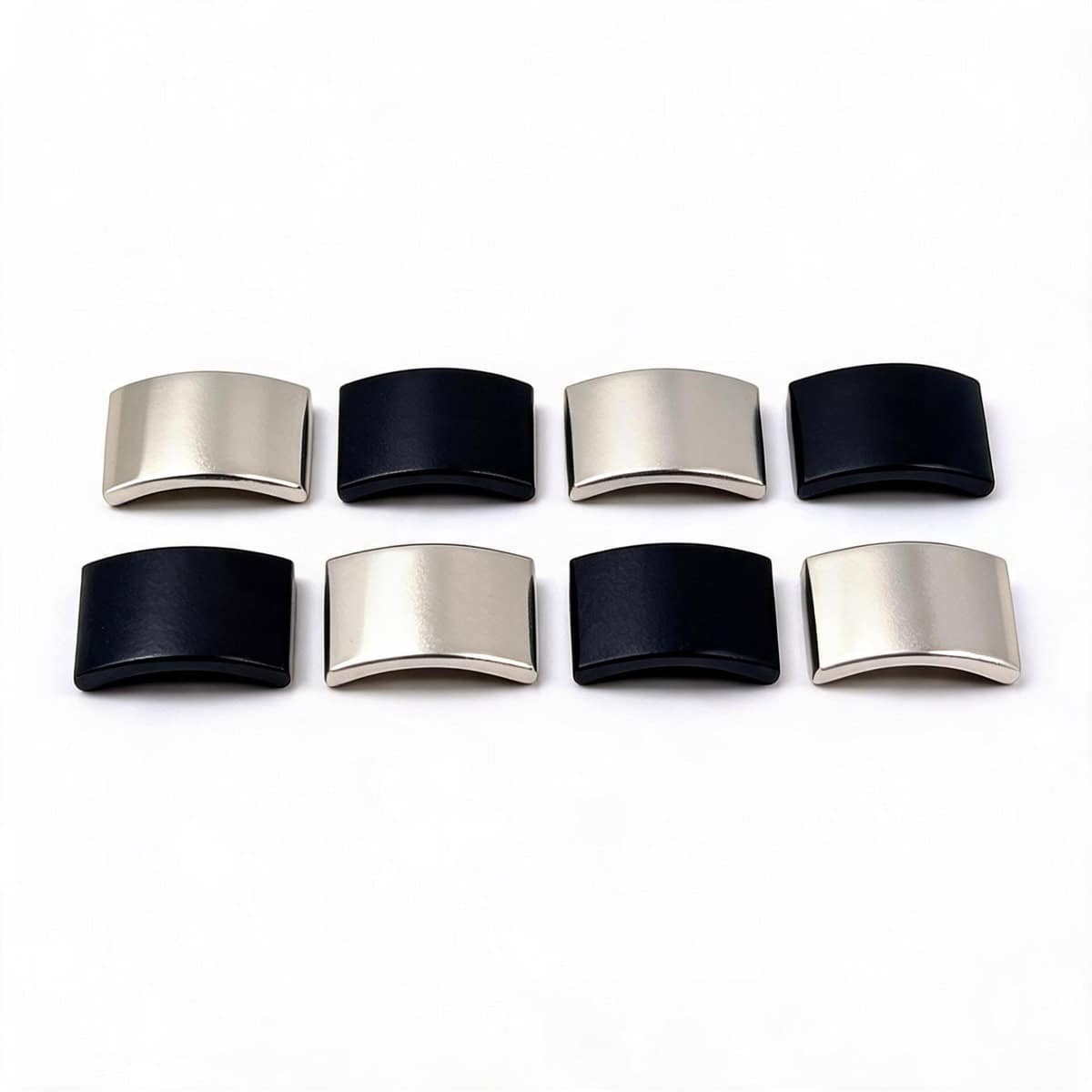
As a motor magnet manufacturer, we make arc and bread-loaf segments, laminated stacks and radial rings in sintered NdFeB, N35 to N55 and up to AH. No MOQ.
- N35 to N55
- SH, UH, EH, AH
- ±0.05 mm
- Matched rotor sets
- N55
- Top sintered grade
- 230 °C
- AH series working limit
- ±2%
- Flux per pole, matched per rotor
- 45+
- Countries we ship to
Which magnet shapes go into a motor?
Magnets for motors come in four forms: arc or bread-loaf segments bonded to the rotor, segmented laminated stacks where eddy-current heat matters, and radially oriented or multipole rings for small, fast rotors. We make the segments, stacks and radial rings in sintered NdFeB to your drawing; multipole rings we make in injection molded NdFeB. Building a disc rotor instead? Read axial flux vs radial flux motor magnets.
Each shape is detailed below; the grade table shows which grades go into which motor.
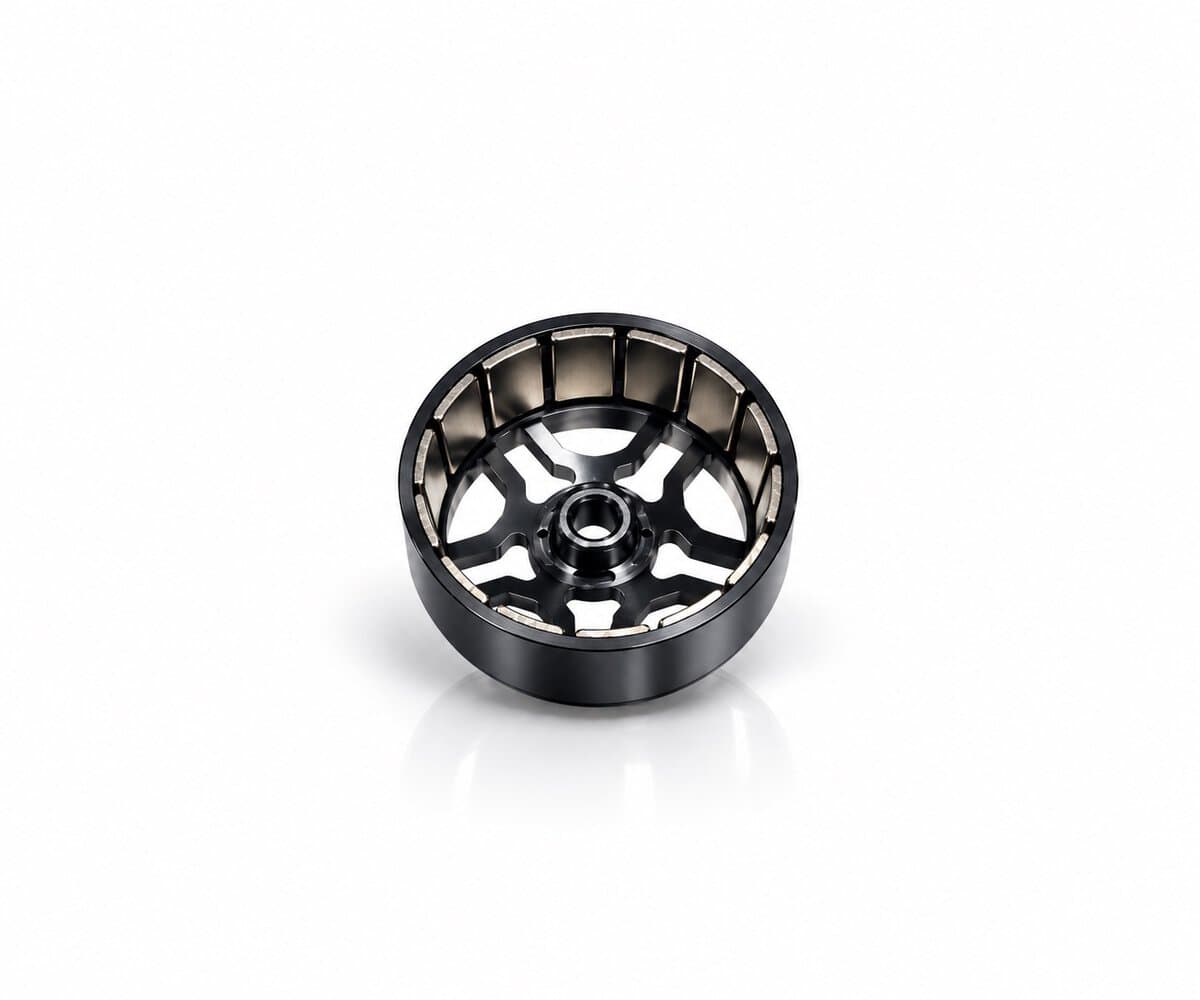
Arc segments, laminated stacks or rings: which does your rotor need?
The rotor layout and the speed decide the form. Send the drawing and we confirm the form with the quote.
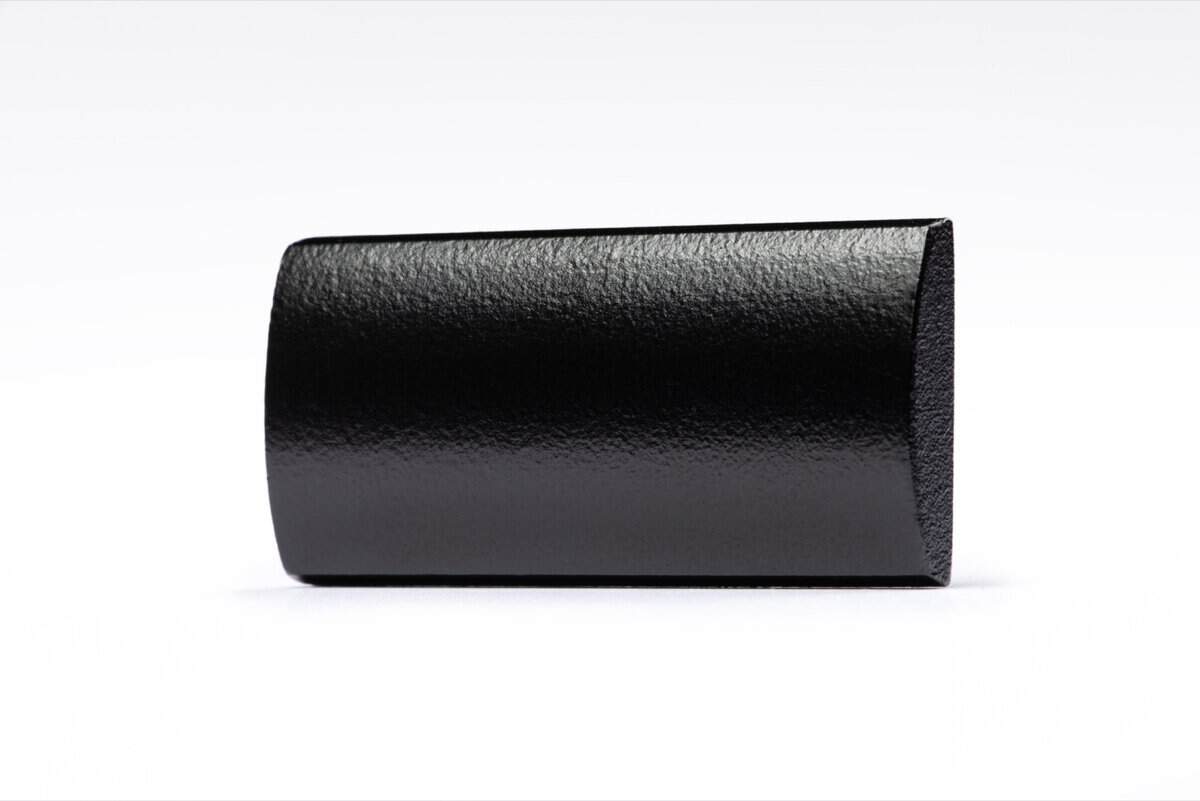
Arc and bread-loaf segments
Arc segments follow the rotor radius; bread-loaf segments have a flat back and a curved face, which shapes the air-gap field for smoother torque. Both are ground to ±0.05 mm as standard and supplied as flux-matched sets per rotor, ready for bonding.
Segmented and laminated magnets
Thin slices bonded with insulation between them cut eddy-current heating in high-speed and high-frequency motors. One delivery drone motor we supply uses N48H split into 6 segments per pole.
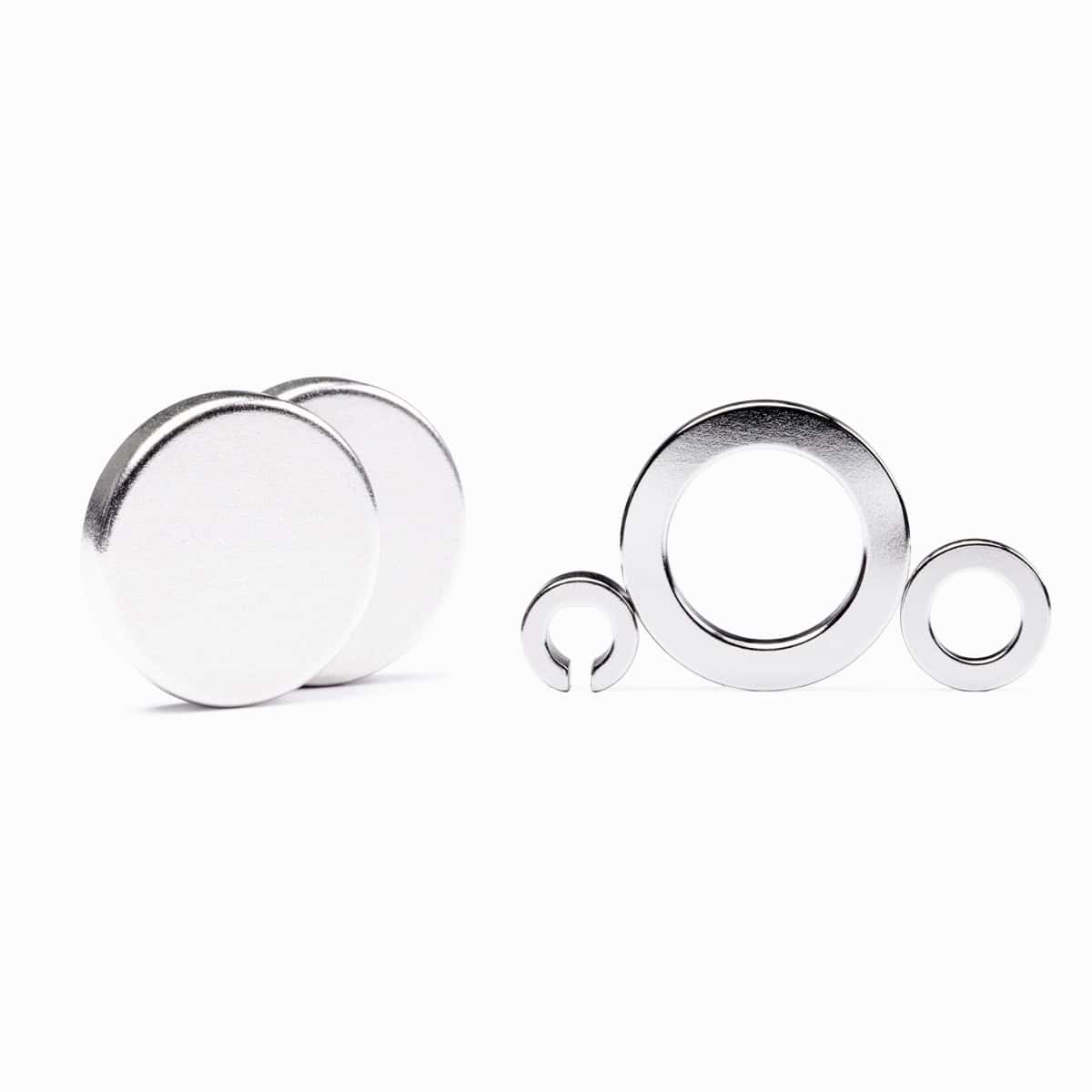
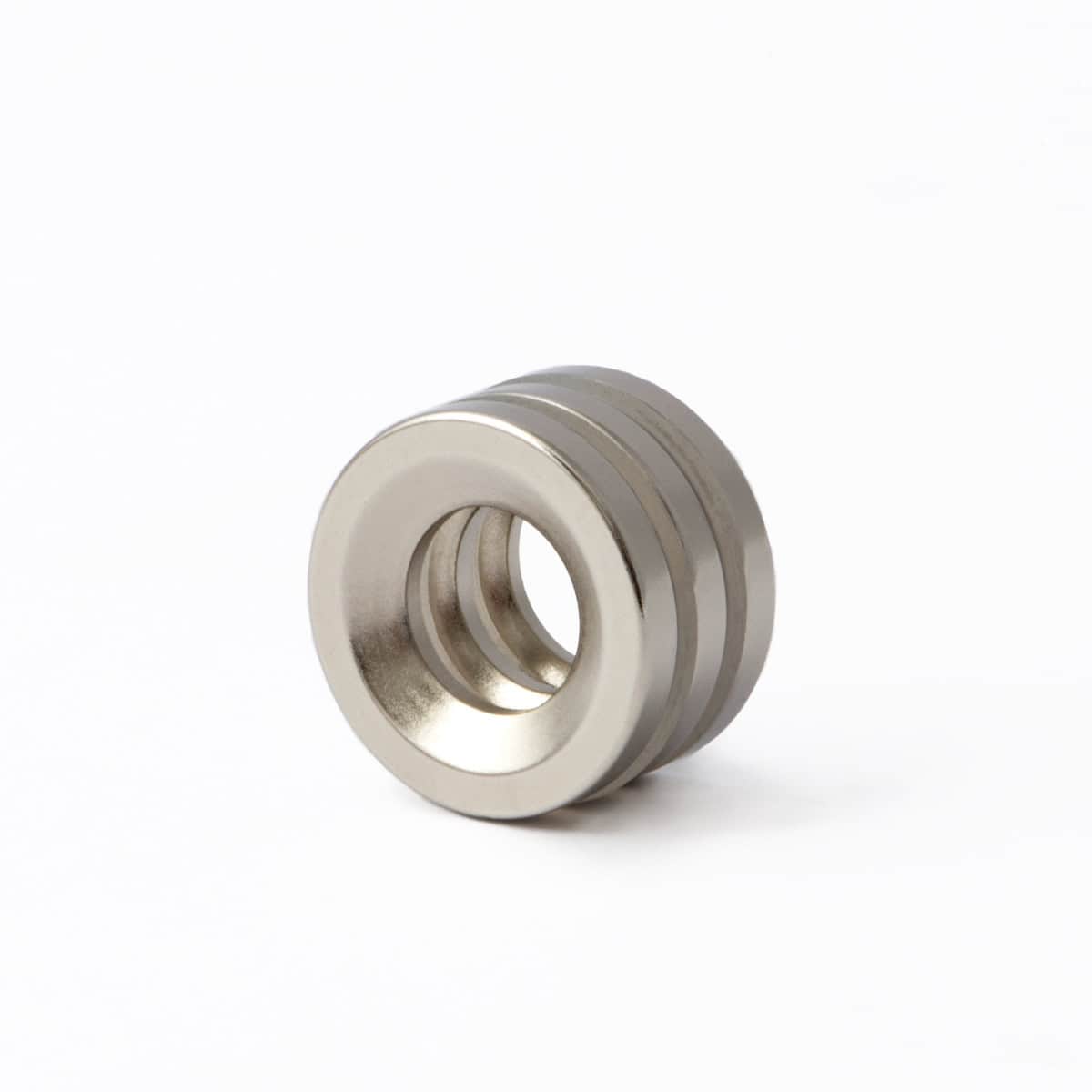
Radial rings
One ring instead of many segments on small, fast rotors. Sintered rings can be radially oriented. For complex multipole patterns, see injection molded NdFeB, which is molded to net shape.
+ Your rotor
Halbach sets, skewed segments or a form not shown here: send the drawing and we tell you what is buildable.
Which grade does your motor need?
Start from the worst-case temperature the magnet will see, not from the strength. The number sets the strength, the suffix sets the heat it survives. These are the grades we supply most often; the final grade is confirmed against your load and temperature at drawing review.
| Servo motors | N45SH, N45UH, N48UH, N42EHSH to EH series: 150 to 200 °C |
|---|---|
| EV traction motors | N42SH, N45SHSH series: 150 °C |
| Drone motors | N48H, N50SHH and SH series: 120 to 150 °C |
| Humanoid robot joints | N48UH, N45UH, N52M, N45SHM to UH series: 100 to 180 °C |
Outside the table3 rows
| No heavy rare earths | Up to N48SHWithout dysprosium or terbium |
|---|---|
| Above 230 °C | SmCo, up to 350 °CSmCo5 and Sm2Co17 |
| Every grade we make | Full grade tableBr, Hcj and BHmax in the NdFeB grade chart |
Series working limits7 rows
| N | 80 °CN35 to N52, plus N55 |
|---|---|
| M | 100 °CN35M to N50M |
| H | 120 °CN35H to N50H |
| SH | 150 °CN33SH to N48SH |
| UH | 180 °CN30UH to N48UH |
| EH | 200 °CN30EH to N40EH |
| AH | 230 °CN28AH to N35AH |
What goes wrong in each motor, and how do we handle it?
Each motor type fails its magnets in its own way. Pick yours, then go to the page written for it.
- Risk
- Uneven flux from pole to pole shows up as cogging torque and noise.
- Our fix
- Flux matched from pole to pole, and magnets shipped as sets per rotor.
- Risk
- High rotor temperature demagnetizes the magnets, and heavy rare earths push the cost up.
- Our fix
- SH grades, available with grain boundary diffusion, which cuts dysprosium use by 40–70%.
- Risk
- At high speed, eddy currents heat the magnets; a stronger grade alone does not fix it.
- Our fix
- Segmented laminated magnets. One delivery drone motor uses N48H, 6 segments per pole, ±0.05 mm.
- Risk
- Small joint motors run hot in a closed housing.
- Our fix
- UH grades rated to 180 °C, ground to ±0.05 mm for small air gaps.
- Risk
- High volumes and humid or corrosive air.
- Our fix
- NiCuNi, epoxy or zinc chosen against salt-spray hours, or Parylene where the customer specifies it. One HVAC motor maker in North America uses Parylene-coated magnets in its ECM motors.
- Risk
- Arc segments with the wrong grade lose torque as the motor warms up.
- Our fix
- Grade picked from the worst-case winding temperature, then confirmed at drawing review.
Use another product when
- The magnet runs continuously above 230 °CSamarium cobalt, rated to 350 °C
- A small rotor needs a complex multipole ringInjection molded NdFeB, molded to net shape
What drives the price of a motor magnet?
We quote every motor magnet against its drawing, so there is no price list. These six things move the price most, roughly in this order.
| Driver | Why it moves the price | How to save |
|---|---|---|
| Grade and heavy rare earths | Dysprosium and terbium are the most expensive part of a high-temperature grade. | Grain boundary diffusion cuts dysprosium 40–70%; grades up to N48SH need none. |
| Size and tolerance | Grinding to ±0.05 mm costs more as parts get thinner or longer. | Hold tight tolerances only where the air gap needs them. |
| Segmentation | Each laminated slice is cut, insulated and bonded. | Segment only where eddy-current heat is real. |
| Coating | Specialty coatings add process steps and inspection. | Pick the coating against the salt-spray hours you need. |
| Magnetizing and sorting | Sorting by flux on automatic equipment carries a tooling fee. | Laser polarity marking is free. |
| Annual quantity | Setup and tooling spread over the volume. | No MOQ; the unit price falls as annual volume rises. |
Grades with heavy rare earths can need a Chinese export license. We prepare the documents and plan the license window into your schedule.
What do you get with every motor magnet order?
The paperwork and sorting your SQE asks for when a rotor design goes to production. Made in ISO 9001 and IATF 16949 certified plants; certificates available on request.
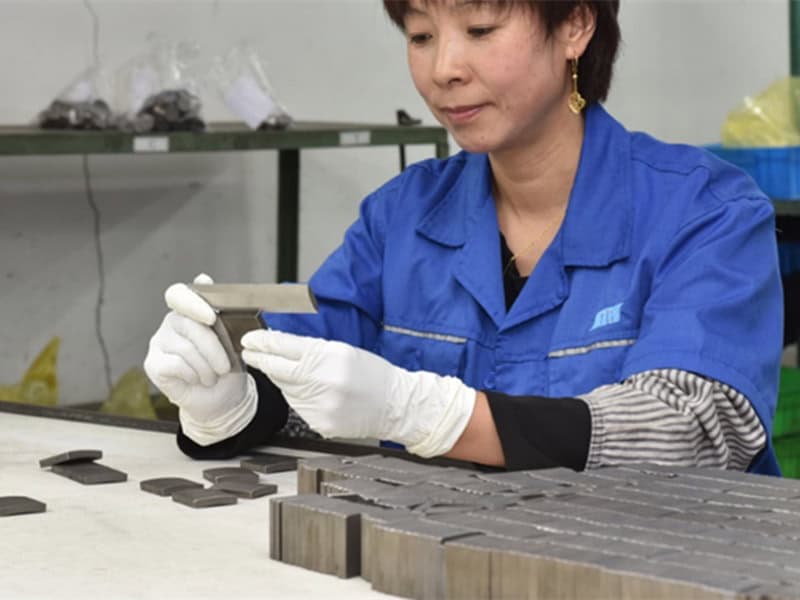
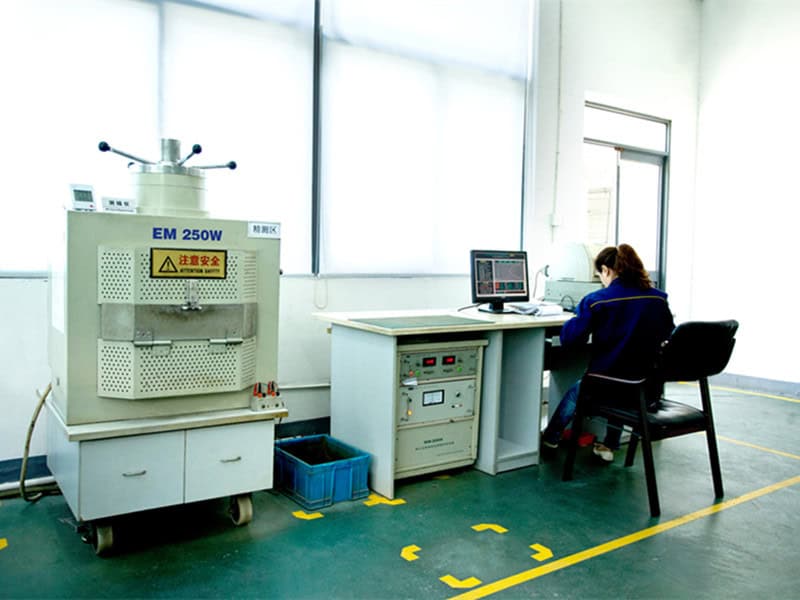
A test report with every batch
Br, Hcj, Hcb and BHmax measured on each batch and dimensions sampled to AQL 1.0, with the report shipped with the goods.
Sorted by flux, matched per rotor
Automatic flux sorting groups magnets into sets per rotor before packing. Sorting carries a tooling fee.
Laser polarity marking
North or south marked on every magnet, free of charge. The mark cuts through the coating at that spot, so on parts that need maximum salt-spray resistance we confirm the marking method at drawing review.
Dy and Tb content, certificate of origin
A dysprosium and terbium content certificate and a certificate of origin are available with the shipment.
Salt-spray data for the coating
NiCuNi 24–72 h, epoxy 48–72 h, zinc 12–24 h, so the coating is chosen against numbers.
Export license paperwork
Application documents prepared by us for any grade that falls under China's export controls.
What should you send for a motor magnet quote?
An incomplete set is fine to start; we tell you what is missing.
- You send
Drawing and duty
The magnet or rotor drawing, the worst-case temperature, pole count and magnetization, speed or switching frequency, and annual volume.
No MOQ
- We reply
Grade and gaps
A recommended grade and form, and a list of anything missing from the drawing.
Within 24 hours on working days
- Samples
Prototype magnets
Prototype magnets to your drawing, to test in the rotor before production.
7–15 days, usually free
- We ship
Production
Sorted, marked and packed as sets per rotor.
Custom orders typically ship in 6–9 weeks
What do motor engineers ask before ordering?
What magnets are used in electric motors?
Most permanent magnet motors (BLDC, PMSM, servo and EV traction) use neodymium motor magnets: sintered NdFeB shaped as arc or bread-loaf segments, laminated stacks or rings. BLDC motor magnets are usually arc segments or rings. Ferrite is used where cost matters more than size, and samarium cobalt where NdFeB runs out of temperature.
How do I choose the grade for a motor?
The hottest point of the duty cycle, overload included, picks the series (H, SH, UH, EH or AH); the strength you need picks the number. The grade table above lists what we supply for each motor type.
When do motor magnets need to be segmented?
When eddy currents heat the magnets: high speed, high pole count or high switching frequency. Splitting each pole into insulated slices cuts that heat; a stronger grade alone does not. Tell us the speed or switching frequency with the drawing.
How consistent is the flux from pole to pole?
We hold flux per pole within ±2% and ship magnets as matched sets per rotor. Automatic flux sorting carries a tooling fee.
Can you make motor magnets without dysprosium or terbium?
Yes, grades up to N48SH. For higher temperatures we use grain boundary diffusion, which cuts dysprosium use by 40–70%, and we can provide a Dy/Tb content certificate.
What decides the price of a motor magnet?
Mostly the grade and its heavy rare earth content, then size and tolerance, segmentation, coating, sorting and volume. The price table above shows how to save on each.
What is the MOQ and lead time?
No MOQ. Samples take 7–15 days and are usually free. Standard grades and sizes ship in 7–14 days; a custom grade or shape takes 6–9 weeks.
Do motor magnets need an export license from China?
Some grades with heavy rare earths do. We prepare the license application for you; it typically takes about 12 weeks, so we plan it into your schedule.
Send the motor drawing. We will tell you what is missing.
An engineer replies with a recommended grade and form for your rotor, and a list of anything missing.
- Drawing
- Worst-case temperature
- Pole count
- Speed or switching frequency
- Annual volume
Sintered NdFeB motor magnets from our production plants in Guangdong, Zhejiang and Liaoning, shipped to 45+ countries.